Ruislip High Street household rubbish collection options
Posted on 03/09/2026
Ruislip High Street household rubbish collection options: a practical local guide
If you live, work, or shop around Ruislip High Street, you already know rubbish has a habit of piling up at the least convenient moment. One day it is a broken wardrobe, the next it is a post-clear-out heap of bags, cardboard, and that one awkward item nobody wants to deal with. This guide to Ruislip High Street household rubbish collection options breaks down the real choices in plain English, so you can pick the route that fits your space, schedule, and budget without guesswork.
We will look at how collection usually works, when each option makes sense, what to watch out for, and how to avoid paying for the wrong service. If you are trying to clear a flat, a terrace, a family home, or just a cluttered hallway that has slowly become a storage unit, you are in the right place. And yes, we will keep it practical.

Why Ruislip High Street household rubbish collection options Matters
Household rubbish is never just "stuff to get rid of". Around a busy local high street, it can become a space issue, a safety issue, and sometimes a neighbour-relations issue too. A bag left a little too long in a porch, or an old sofa leaning in a front garden, can quickly make a property look neglected. That matters whether you are staying put, renting out, selling, or simply trying to keep daily life calm.
Ruislip High Street household rubbish collection options matter because households rarely face one tidy category of waste. There is the everyday flow of black bags, then bulky items, then the odd bit of garden waste, old appliances, broken furniture, or leftover junk from a room makeover. If you choose the wrong method, you may end up making extra trips, paying for more capacity than you need, or leaving waste sitting around longer than it should.
There is also the local rhythm to think about. High street properties tend to have less forgiving access, tighter parking, and busier footfall. A collection method that is easy in a suburban driveway can be awkward beside a parade of shops or a flat above ground-floor premises. In our experience, the simplest plan is often the one that respects the realities of the property, not just the pile of rubbish.
For many residents, the real question is not "How do I get rid of this?" but "How do I get rid of it efficiently without creating more hassle?" That is where understanding the options helps. It keeps you in control. And frankly, that is a nicer place to be.
If you are comparing household clearance with broader clearance needs, a general overview like the services overview can help you see how different jobs fit together without overcomplicating things.
How Ruislip High Street household rubbish collection options Works
The basic process is straightforward, but the details matter. Most household rubbish collection services begin with an assessment of what needs removing, how much space it takes up, and whether anything needs special handling. The more accurate the description, the smoother the collection tends to be. Sounds obvious, but people often underestimate volume. A "few bags" can turn into half a van once the hidden corner junk comes out.
In a typical household collection, the service provider will want to know what types of items are involved. Mixed general waste, furniture, garden trimmings, broken electricals, light DIY debris, and clutter from lofts or garages may all be treated differently. Some items can be handled easily; others may need separate routing or extra care. That is one reason many people prefer a flexible rubbish collection rather than trying to force everything into one bin-day solution.
There are usually a few broad ways this can work. You might:
- use your regular household bins and council collection arrangements for ordinary waste;
- book a one-off pickup for bulky or awkward items;
- arrange a full-house or partial-house clearance;
- choose a broader waste removal service when the job spans several waste types.
The right choice depends on urgency, volume, item type, and access. A single mattress is very different from a full hallway of old furniture. A few sacks of decluttered items are very different from a post-renovation mix of packaging, broken shelves, and garden cuttings. One approach is not better in every case; it is just better matched.
People sometimes ask whether they should sort everything in advance. The short answer: yes, ideally. It is not always essential, but a bit of sorting can reduce surprises, speed things up, and sometimes lower the cost. For example, keeping clean cardboard separate from general mixed waste may make the process simpler. On a drizzly Wednesday evening, nobody enjoys re-bagging everything in the hallway because the first plan was, let's face it, a bit optimistic.
For properties with larger clear-outs, especially after a move or a long period of clutter, house clearance support can be more suitable than item-by-item collection. If that sounds familiar, house clearance in Ruislip is worth understanding as a separate option.
Key Benefits and Practical Advantages
The most obvious benefit is time. A good collection option saves you from repeated lifting, multiple trips, and the logistics headache of finding where to put things until recycling day. But there are several quieter benefits too, and they matter just as much.
1. Less stress. When rubbish is dealt with in one go, the house feels lighter. That is not a dramatic claim; it is just true. People often notice an immediate difference in how a room feels once the excess is gone.
2. Better use of space. In smaller homes and flats near a busy high street, every square metre counts. Clearing out old items can free a bedroom corner, a shed, or a narrow passage that had slowly become a dumping ground.
3. Safer movement around the home. Bags in hallways and stacked furniture are trip hazards. They also make cleaning harder. Clearing them out reduces clutter and improves day-to-day safety.
4. More flexible timing. A lot of household rubbish does not fit neatly into scheduled bin days. Collection options give you room to deal with things when the need actually appears, not when the calendar says so.
5. Better recycling outcomes. A thoughtful collection approach usually makes it easier to separate reusable, recyclable, and disposable items. If sustainability matters to you, that is a meaningful advantage. For a closer look at responsible disposal practices, see the page on recycling and sustainability.
6. Less disruption to neighbours. This is easy to overlook. Bulk waste left in shared entrances, on pavements, or in communal bin areas can create friction. A planned collection is cleaner and more considerate.
Expert summary: The best household rubbish solution is rarely the cheapest or the fastest on paper. It is the one that fits the type of waste, the access at your property, and the amount of handling you want to do yourself.
Who This Is For and When It Makes Sense
Not every household needs the same approach. That is the whole point. Some people only need an occasional uplift for a bulky item; others need a full sort-out because life has become, well, a bit much.
This topic is especially relevant if you:
- live in a flat or maisonette with limited storage;
- have a narrow frontage or tight access on or near Ruislip High Street;
- are decluttering before a move;
- have inherited a property that needs clearing;
- are replacing furniture or appliances all at once;
- have accumulated garden waste, household junk, and old packaging together;
- need a practical solution after a home refresh, tenancy change, or family tidy-up.
It also makes sense if you are in that awkward middle zone: not enough waste for a huge clearance, but too much for a normal bin. Truth be told, that is where many people get stuck. They keep postponing the job because it feels too small for a major service and too large for ordinary disposal. Then the pile grows. Naturally.
If you are buying, selling, or preparing a property in the area, clearing waste early can make the rest of the process smoother. A presentable home feels calmer and more organised. That is why people often pair clearance decisions with wider local plans, such as guidance on selling homes in Ruislip or practical advice from buying property in Ruislip.
Step-by-Step Guidance
If you want a simple route through the decision, use this process. It is not fancy, but it works.
- Identify the waste type. Start by separating general household rubbish from bulky items, garden waste, and anything that might need special handling. A quick walk-through of the property is better than guessing from memory.
- Estimate the volume. Think in bags, boxes, chairs, tables, or room sections rather than vague descriptions. "A corner of the garage" helps no one. "Two armchairs, one dismantled wardrobe, six sacks, and a pile of cardboard" is much more useful.
- Check access. Note stairs, narrow doors, parking limits, shared entrances, or any need for carrying items a long way. Access can change the job more than the waste itself.
- Choose the most suitable collection method. Decide whether you need routine bin disposal, a one-off bulky pickup, a general waste collection, or a full clearance.
- Separate anything reusable or recyclable. This is optional, but it often improves efficiency and can reduce what actually needs removing.
- Request a clear quote. Make sure the quote is based on the actual job, not an optimistic guess. This is one place where details save money.
- Confirm what happens on the day. Ask how access will work, whether someone needs to be home, and what should be left accessible. A little clarity saves a lot of running around.
- Do a final sweep before collection. Check cupboards, sheds, under beds, and the top of wardrobes. The hidden bits always show up at the worst moment.
If you are arranging a broader or mixed-load collection, you may find it useful to look at waste removal in Ruislip as the umbrella option, especially when the job is bigger than a simple bin uplift.
Expert Tips for Better Results
A few small habits make a surprisingly big difference. These are the kinds of details people miss when they are rushing, and then regret later.
Be honest about the volume. Understating waste is the fastest way to create friction. If it takes two people to lift something safely, say so. If a sofa is damp, damaged, or awkward, mention that too.
Group similar items together. It makes loading faster and helps with sorting. Cardboard with cardboard. Soft furnishings together. Garden waste in one place. Simple, really.
Keep pathways clear. On collection day, the difference between a tidy stack and a scattered trail is huge. Clear paths reduce the chance of knocks, slips, and wasted time.
Think about timing. Early morning collections can be easier in busy areas because the streets are quieter. Mid-afternoon can be trickier around High Street traffic and pedestrian movement. A small detail, but it matters.
Ask about safety and handling. Heavy items, sharp edges, or broken glass should not be left to chance. A responsible service should be comfortable discussing how it manages lifting and handling. If safety is a concern, it is worth reviewing insurance and safety information before you book.
Keep an eye on mixed waste. When you mix everything together, it can be harder to divert recyclable material. Sometimes a little sorting upfront is the difference between a tidy job and a messy one.
And here is a small one: take photos before you start. It helps if you need to compare quotes, check progress, or simply remind yourself how far the room has come. A surprising number of people forget this. Then later they stand there thinking, "Was it really this bad?" Yes. Probably worse.

Common Mistakes to Avoid
There are a few recurring mistakes that can turn a simple collection into a frustrating job.
1. Leaving everything until the last minute. Waste builds pressure. Once it blocks a doorway or fills the car boot you wanted to use for other things, the job becomes more stressful and less efficient.
2. Guessing the load size. This is a classic. What feels like "a bit" can be a substantial pile once measured properly. If you want a fair quote, be specific.
3. Forgetting access restrictions. In a busy local setting, parking and carry distance are not trivial. They can affect both timing and cost.
4. Mixing special items without asking first. Some waste streams need separate treatment. Always flag items that are unusual, bulky, fragile, or potentially hazardous.
5. Assuming every collection is the same. It is not. A general household rubbish job, a garden tidy-up, and a full property clearance all behave differently.
6. Ignoring the recycling side. If you never separate anything, you may miss an easy chance to reduce landfill-bound waste. Not always practical, but worth thinking about.
7. Booking the wrong type of service. This happens a lot with people who only need one or two items removed, or who actually need a more complete clearance. A little planning avoids paying for the wrong level of help.
Tools, Resources and Recommendations
You do not need a shed full of equipment to manage household rubbish properly, but a few simple tools help.
- Heavy-duty sacks or reusable containers: better than thin bags that split on the stairs.
- Marker pen and labels: useful if you are sorting recyclable, keep, and remove piles.
- Gloves and sturdy shoes: basic, but easy to forget when you are in a hurry.
- Tape measure: handy for furniture, loft access, and estimating clearance space.
- Phone camera: useful for quotes, planning, and before-and-after reference.
- Clear access plan: a note of where items will be placed and how they will be carried out.
For local residents comparing service breadth, the page on rubbish clearance in Ruislip is useful because it sits well alongside everyday domestic jobs. If your task has a greener angle, the article on London's pathway to zero waste adds a helpful broader perspective.
Useful recommendation? Keep a small "departure pile" area in the home whenever you start decluttering. One place for items going out. That single habit stops waste from spreading into three rooms and a hallway. It sounds minor. It is not minor.
Law, Compliance, Standards, or Best Practice
Household rubbish collection in the UK is shaped by a mix of common-sense practice and legal responsibility. You do not need to memorise legislation to make a good decision, but you should understand the basics.
The first principle is simple: waste should be handled and transferred responsibly. That means using a service that deals with waste in a lawful and traceable way, and not handing rubbish to someone who cannot explain where it goes. If a collection sounds suspiciously cheap and strangely vague, be careful. Very careful.
Householders also have a duty to avoid irresponsible disposal. In practical terms, that means not fly-tipping, not leaving items where they cause obstruction, and not assuming someone else will sort out a messy pile for free. The best practice is to keep waste contained, describe it accurately, and use a provider that can explain how the materials are managed.
Compliance is especially relevant for items that may involve sharp edges, electrical components, or mixed materials. Broken white goods, old furniture, and damp waste can all need a more considered approach. For households, the aim is not paperwork for its own sake. It is sensible handling.
It also helps to expect clear pricing, transparent terms, and a sensible payment process. If you want to review how a provider handles this side of things, pricing and quotes, payment and security, and the terms and conditions pages are the kinds of places that usually clarify expectations.
Options, Methods, or Comparison Table
Here is a simple comparison to help you choose the right route. Not every household will need the same thing, and that is entirely normal.
| Option | Best for | Pros | Possible drawbacks |
|---|---|---|---|
| Regular household bin use | Ordinary daily waste | No special booking, familiar routine | Not suitable for bulky or excess waste |
| Bulky item collection | Sofas, mattresses, single large items | Simple for one-off awkward items | Can be limited by item type or timing |
| General rubbish collection | Mixed household clutter and bags | Flexible and convenient | May not suit heavy or specialised waste alone |
| House clearance | Whole rooms, full homes, inherited properties | Most comprehensive solution | Often more involved than a basic uplift |
| Waste removal service | Mixed domestic waste, larger clear-outs | Good for tailored jobs with varied waste | Needs a clear brief to avoid confusion |
If your job includes outdoor waste too, especially after pruning or tidying, the dedicated garden waste removal in Ruislip page may help you separate that part of the work from the household load.
Case Study or Real-World Example
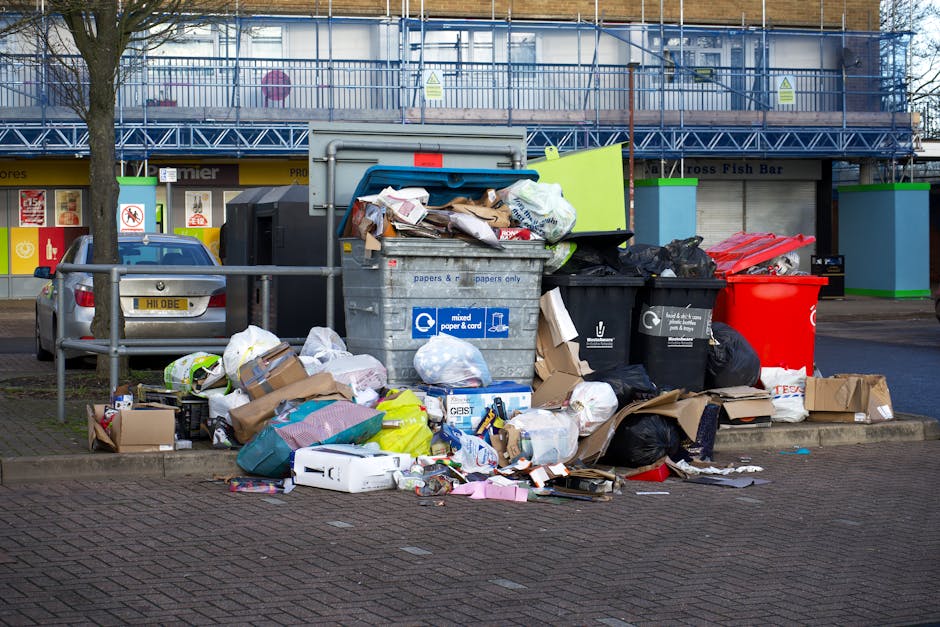
Consider a typical Ruislip High Street flat where the occupier is preparing for a room refresh. There are three black bags of general waste, an old bedside cabinet, a collapsed shelving unit, a bag of worn-out textiles, and a stack of flattened boxes from new furniture. Nothing dramatic. Just the sort of mixed pile that quietly grows in a corner for weeks.
At first, the resident thinks a normal bin run will do the job. It will not. The furniture is too awkward, the bags are too many for a simple carry-out, and the stairwell is narrow enough that dragging things down one by one would be irritating at best. After a quick assessment, the resident separates cardboard for recycling, groups the soft items together, and arranges a mixed household collection.
The result is not just cleaner space. The hallway is usable again, the flat feels ready for the new furniture, and the stress of "I should deal with that pile" disappears. That emotional relief is often the part people do not mention first, but it is real. You can almost hear the room breathe, if that makes sense.
In a slightly larger case, such as a property being prepared for sale or a post-move emptying job, households often benefit from looking at a broader service and a more structured plan. When the job grows beyond a simple uplift, a page like your rubbish removal needs can be a useful starting point for matching the work to the right type of help.
Practical Checklist
Use this checklist before you book or carry out a collection.
- Have I identified every item I want removed?
- Have I separated general waste, recyclables, and anything unusual?
- Do I know whether the waste is bulky, heavy, fragile, or awkward?
- Have I checked access, parking, stairs, and carry distance?
- Have I estimated the quantity honestly?
- Do I know whether I need a basic collection or a full clearance?
- Have I cleared the route from the property to the pickup point?
- Have I confirmed the booking details, timing, and any special instructions?
- Have I set aside anything I want to keep?
- Have I considered the recycling or reuse angle where possible?
A quick checklist like this saves time and stops silly mistakes. And yes, "Where did that important bag go?" is a real question people ask themselves at the worst possible moment.
Conclusion
Ruislip High Street household rubbish collection options are really about matching the job to the right method. The more clearly you understand what you need removed, how much there is, and how accessible the property is, the easier it becomes to choose a sensible route. For small everyday waste, ordinary routines may be enough. For bulkier, mixed, or time-sensitive clear-outs, a more flexible collection or clearance approach usually makes life much easier.
Most people do not need a complicated system. They need a clean outcome, a fair process, and a service that respects the practical realities of a busy local address. That is the sweet spot. If you keep the decision simple, stay honest about the load, and think about access and recycling from the start, you are already ahead of the game.
Get a free quote today and see how much you can save.
And if you are still weighing things up, take your time. A well-cleared home always feels better than a rushed one, and sometimes the best progress is simply getting the first pile out of the way.

From a young age, Blair has cultivated a passion for order, which has now matured into a prosperous profession as a waste removal specialist. She derives satisfaction from transforming disorderly spaces into practical ones, aiding clients in conquering the burden of clutter.
 Tipper Van - Rubbish Removal and Waste Disposal Prices in Ruislip, HA4
 Luton Van - Rubbish Removal and Waste Disposal Prices in Ruislip, HA4